Thursday, 29 November 2012

Bridges Abridged, and an Addendum

 
Alan with his immaculate sense of timimg has once again produced a link that allows me to update progress on the substance of an earlier Blog inwhich I detailed the various Walton Bridges.
The first bridge was captured by Canaletto
 
This Bridge was built in 1750 and pulled down 23 years later because it proved too costly to maintain.

Over the period since, 4 other bridges have been constructed.  In less than my life-time two new bridges have spanned the Thames, both have been temporary and cheaply constructed with little maintenance. In the same time traffic has grown from a few buses and lorries, and the odd car,  and lots and lots of bicycles, to traffic carnage.


This is an everyday, all day, scene, and a place of numerous accidents.
 
The first span, of bridge number 6, from the Shepperton side to mid-Thames.  The Bridge was closed during the night and the event was attend by, so I'm led to believe, hundreds of spectators. 

Work starts on the 4 lane approach, across the Engine River, to the Thames to replace the listed causeway.

 
The new Bridge is due to open mid 2013 - will I live to see number 7?

Monday, 26 November 2012

A Reflection on Architecture


My interest in architecture has tended to concentrate on when buildings were erected with human and animal muscle-power.  It harks back to the days before hard-hats and toe-tecter boots, and Health & Safety, before steam, internal combustion and electricity was used to dig, shape and lift.  Back to when design and planning was learnt by years of experience and carried in the head.

To me this is a piece of architecture of interest;

 
Neolithic long barrow on Guernsey
 
A little early and a little exposed, but nonetheless a thing of wonderment;  how did they do that?


Egglestone Abbey 
 
Again a little exposed and showing the signs of poor maintenence in the past, but this allows us to view it at its most basic.
 

Little Moreton Hall
Requiring a little updating

Victorian Replication
Liverpool China Town 
Architechture, but not as we normally know it in the North-West
 
And, now for something modern.  I generally do not hold the modern with much esteem, having seen, and worked on, the construction of Offices, Factories, Tower Blocks and Houses in the sixties, I found too samey, shoddy and lacking in any real aesthetic value.  Much could not even claim a utilitiarian value.
Since the sixties, I think there has been some improvements.
The Spinnaker Tower
A spire to Mammon 


 The Liverpool Dock Building as seen in glass of the not too attractive Mann Island Building

Thursday, 22 November 2012


Sepia Saturday 153

As this my first entry for nearly twelve months, I've decided to take the obvious and chose pairs or couples, or two's, and young (and perhaps, not so young) women as the theme this week.  Not only is it obvious but it also give an excuse to go rummaging through the various bundles of old photos lying uncared and moulering for in the back of my draws and images downloaded and stored in half-forgotten folders on the PC.

I'm not sure where this image comes from, but I've taken a lead from our leader and cropped it heavily.  The intention was not to find a picture within the picture but to remove the naughty bits that might cause offence to the sensitive.


This is clearly one of those mildly erotic images so much loved by upper class Victorian Gentlemen.  To be true to their superiority and propriety it has been cropped so as not cause respectable ladies to swoon, shock children or arouse animal passions in the lower classes and the feeble-minded..


In common with many others I often try to imagine, from the faces of the sitters, what is going on in their heads.

 
Quick, quick, hurry up, I'm going to scream.  Don't you dare, and you Mr Snapper get a move on.


I'm uncomfortable, but cute.  I'm a big girl now but still cute.

Monday, 19 November 2012

I've just noticed my last post was 23rd December;  It must have been some Christmas Party.

That got me thinking.  Time - strange concept looking forward ten months seem like - well ten months, but looking back it is barely 5 minutes.  I have this theory.  Time forward is unused, it is real time, measured in hours and minutes - it is the whole duration.  But, time backwards is a function of age and the memory of experiences .  The ten months since my last post is just about 1.3%. of my experiences.  And that don't seems so long.

Seriously though I must get round to posting a bit more frequently. In the time that has passed, Santa's come and gone and is getting ready to come again.  I succumb to constraints of process that made work increasingly more difficult (or pointless) and retired.  We've been away a number of times, taken hundreds of pictures, planted a couple of relatives, and attended my son's wedding.  

I've taken to going to a gym.  What I'm capable of doing, as an Old, Fat ex-Smoker, has surprised my Trainer as well as myself.  I still need to give myself a little "talking to" to get going, but quite enjoy it when I start.  I do about an hour, but this can stretch on a bit when I'm cooling down on the bicycle, if an entertaining body is working out within my eye-line.

The turning has taken a bit of a back seat to the carving.  The carving is not as immediate, but it produces a lot less dust.

 
Lincoln Imp in Oak

 
Greenman in Lime

 
Little Owl in Apple


I still spend time on the PC, and must get back into the Blogging mode, instead of playing cards and looking at, but seldom responding to, other people Facebook postings.  So much is going on, the New Walton Bridge (a subject I touched on a number of times) is under construction, some of the pictures I've taken are interesting or tell a story, the carving and the turning may be suitable subjects for future contributions.
 
If any one picks up on this, I'm pleased to meet you and hope to link up again..


Wednesday, 21 December 2011

Sepia Saturday 106


Does this seem familiar?

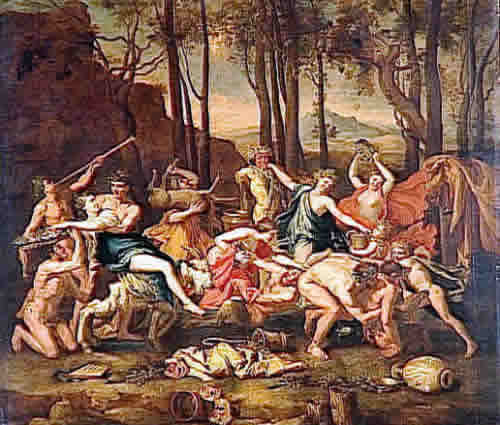
Mithras, Persian sun god, bringer of spiritual light into darkness, he is truth, goodness and love.  In 1st Century Rome followed by Emperor, Soldier, Patrician, Artisan, Peasant, Slave for his qualities of discipline, duty, truthfulness and compassion.  His Birthday 25th December.


Saturnalia, Roman Festival 18th December to 25th December - a period of drunkenness and debauchery, in which the spiritual gives way to the carnal


Not much change in 2,000 years.

Seasonal Greetings to each and everyone.


Friday, 16 December 2011

Sepia Saturday 105


Alan's posting this week, brings focuses our attention on Mrs Beeton and the extravagances of Victorian and Edwardian Dishes and Meals.  Mrs Beeton's main contribution was the bringing together the best recipes and household  practises of her day. She formalised them into a schedule of duties and accompanying etiquette for each social layer within the Victorian household.  Her attentions were mainly directed at the aspiring middle classes and provided a blueprint  for them to ape the very rich.  She detailed how each level, from the Mistress and Master of the House down to the lowliest scullery maid, should act and behave in any conceivable circumstance.

Whilst, she was not herself the developer of many of the recipes she brought to her readership, her treatment of them and her functioning of the household as lead her to be considered the originator of the Dinner Party.  For the rich this an almost daily event, and for the aspirant middle classes an event to relish.

The size of meals was almost legendary, and banquets were held with 12 courses and more, but for the main part they were merely sumptuous with a variety of dishes for each course, as the following menu for Queen Victoria's 1896 Christmas Dinner would suggest;


The menu is quite formalised and most follow the same format.
Potages - now refined into a soup or consomme course, and accompanied by Sherry
Poissons - fish course, or courses, with all manner of sea foods and fish. Served with a good white wine.
Entree - the entry to the main meal and would include such as vol-au-vants, Sweetbreads, mutton cutlets etc and accompanied by Champagne or claret
Releves - the main part of the meal - and would include roast joints, Poultry, Meat Pies etc and served with Burgundy.  This would be followed by a course of roast game Field fares, snipe, pheasants, wild duck etc served with a claret.
Entremets - This coursed tended to be divided into three;
Dressed vegetables
Fruit
Savoury such as devilled Sardines or cheese  - all served with an appropriate wine.

At this stage the table would be cleared and the guests provided with fresh glasses and plates for ices, fruit and nuts all accompanied with Madeira.

After this the ladies would leave the gentlemen to their pipes and brandy, and coffee which would be served to the Ladies in the drawing room and the gentlemen at the dinner table.

Contrast this with the poor, or most of the population.  The fare for most country dwellers was boiled pork or bacon, accompanied by vegetables boiled in the same pot. Probably the majority of homes did not have any form of range or oven, things were cooked (generally boiled) in a pot hung over the hearth.  In the major towns, the poor simply did not have cooking facilities and were fed mainly from the cooked meat shops.  This state of affair continued in to the 20th century.

A School Dinner menu in the Ryedale Folk Museum shows;

Penny Dinner - Boiled Pork, Meat Pudding and Vegetables
Farthing Dinner - Soup, Bread and Jam
Free Dinner - Cup of cocoa or Soup made from boiled meat Bones

This is clearly shown in a little History of Lockton, a Village in the North Yorkshire Moors, to which I claim an Ancestral connection.  The first chapter is given over to the account of the village in the pre-WW1 period through the recollection of Mary Ellen Boyes of her visits to her grandparents and family.  She discribes

"... For a typical dinner a piece of bacon was put into a big iron pan covered with water and hung on reckon crooks over the fire.  The bacon was usually very fat as the pigs killed weighed at least thirty stone and many forty or more. Then a Turnip in a net, cabbage and potatoes each in a net, were added. Half an hour before dinner dumplings were added.  First the liquid was served in a basin and called "a few broths", the dumplings and finally a plate of bacon and vegetables. I can't say I enjoyed it, neither did I like boiled sausages.  My uncle had quite a bit of land to shoot over but even pheasants were stewed. "
 What would the villagers have given for the following stop-over snack


for the royal family on its train journey to Balmoral.